About The Workshop
The workshop aims to foster collaboration and stimulate innovation towards the development of next-generation AI research assistants that are reliable, transparent, and seamlessly integrated into the fabric of scientific discovery. Recent advancements in generative AI and agentic systems have unlocked the potential to automate and accelerate every stage of research, from hypothesis generation to paper writing. The rapid advancement of AI-assisted scientific research also brings social and ethical challenges. This workshop aims to advance the frontier of AI-assisted scientific research. Through a series of keynotes, panels, invited talks, paper presentations, and poster sessions, participants will have the opportunity to engage in cross-disciplinary discussions, share innovative ideas, and collaborate on solutions to current challenges.
Topics
The workshop will cover a range of topics, including but not limited to:
- Theoretical frameworks and system designs for autonomous research agents.
- Autonomous research systems that integrate multi-modal information (text, images, structural data) with external tools.
- Case studies of AI assistants conducting scientific research.
- Creation of large-scale, structured datasets for training and evaluating AI assistants and agents for scientific research.
- Novel benchmarks for end-to-end research tasks and specific scientific tasks, including automated literature review generation, experimental design, and scientific hypothesis generation.
- Quantitative and qualitative methods for evaluating the quality of AI-generated content.
- Frameworks for assessing reproducibility, interpretability, and robustness in AI-assisted research.
- Exploration and comparison of different models of human-AI collaboration in the research workflow.
- Design of novel user interfaces and workflows that support seamless human-AI interaction in a scientific context.
- Studies on how AI tools influence the cognitive processes of human researchers.
- Identification and mitigation of biases and hallucinations that AI may introduce or amplify in scientific research.
- Ethical frameworks and safety guardrails for ensuring transparency, interpretability, and reproducibility in AI-driven research.
- Perspectives and discussions on the evolving role of AI in scientific discovery.
Call For Papers
Key Dates
- Submission Deadline: November 18, 2025 (AOE)
- Notification of Acceptance: December 11, 2025 (AOE)
Submission Format
All papers must be submitted in PDF format, using the AAAI-26 author kit. We welcome two types of papers:
Full papers: Full-length research papers from 4 to 7 pages (excluding references and appendices).
Short papers: Research/position papers of up to 4 pages (excluding references and appendices).
Submission Site
The workshop uses OpenReview for paper submission and review. The submission link is https://openreview.net/group?id=AAAI.org/2026/Workshop/AI4Research.
The review process will be single-blinded, and we welcome accepted and published papers. The contributions will be non-archival and only will be hosted on our workshop website. There will be one best paper award for accepted papers with outstanding quality.
Invited Speakers
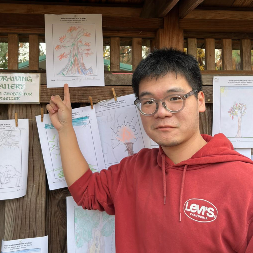

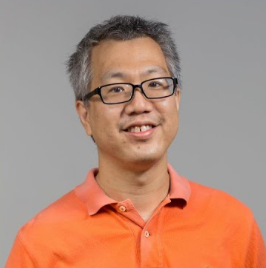
Schedule
| Time | Event |
|---|---|
| 08:50 – 09:00 | Opening Remarks |
| 09:00 – 09:40 |
Invited Talk by Peter Clark Title: From Research Tools to Long-Horizon AI-Assisted Science slides
Abstract: AI has made remarkable progress in assisting with individual scientific tasks over the past two years. However, today's systems still fall far short of supporting the kind of long-horizon, "big science" research that unfolds over weeks or months. In this talk, I'll present our work on Asta, a state-of-the-art AI research assistant that performs a wide range of research tasks, and aims to scale toward long-term scientific support. I'll first illustrate Asta's current capabilities in literature understanding, data analysis, theory formation, and end-to-end autonomous software experiments. I'll then discuss what it takes to extend these capabilities to long-horizon research. If we view science as a search for predictive theories and causal explanations, then true long-term AI assistance requires a tight integration of experimentation and analysis with theory formation. I'll argue that this, in turn, demands a layer of structured reasoning above basic tool use to track hypotheses, evidence, and next experimental steps. I'll describe AutoDiscovery, our current work in this direction, then sketch our longer-term trajectory, and finally offer a perspective on the exciting future of long-horizon AI-assisted science.
|
| 09:40 – 10:20 |
Invited Talk by Yue Zhang Title: AI-driven Research Automation slides
Abstract: Recently, AI has enabled efficiency tools to be developed for expediting research. Various agents have been built for automating literature review, idea generation, academic writing, and scholarly reviewing. Agents have also been constructed for automating the whole research pipeline. In this talk, I will share our research work along this line, covering work in two directions. First, I will discuss work on facilitating the review and publication paradigm, discussing how AI can be useful for recommending literature, making surveys and giving automated reviews. Second, I will discuss some efforts towards building automated AI scientists.
|
| 10:20 – 11:20 | Poster Session 1 |
| 11:20 – 12:00 |
Invited Talk by Chen Zhao Title: AI for Scientific Research with Better Agentic Search Systems slides
Abstract: Agentic search systems such as OpenAI’s deep research have been widely deployed in AI for Scientific Research. Despite promising capabilities, today’s agentic search systems remain far from reliable, one of the pronouncing capacities is that they often retrieve irrelevant or redundant evidence. In this talk, I will discuss our recent efforts toward building better agentic search systems from different perspectives : 1) using text diffusion model as new promising architecture. 2) Benchmarking and Improving Retrieval for Deep Research Agents in Scientific Literature search. I will discuss some future directions in the end of the talk.
|
| 12:00 – 12:40 |
Invited Talk by Chenglei Si Title: Towards Automated AI Research slides
Abstract: Automated AI research holds great potential for accelerating scientific discovery and recursive self-improvement. In this talk, we first present a large-scale human study that rigorously examines whether LLMs can generate novel and effective research ideas. Then, we introduce our latest work on execution-grounded automated AI research, where LLMs propose ideas, implement them as code, run experiments on GPU clusters, and continuously learn from the execution results.
|
| 12:40 – 13:20 | Break & Poster Session 3 |
| 13:20 – 14:00 |
Invited Talk by Yi R. (May) Fung Title: Building the Autonomous Research Scientist: From Exploration Mechanisms to Scholarly Integrity slides
Abstract: The vision of an AI scientist, an agent that can autonomously discover, synthesize, and communicate new knowledge, is rapidly advancing beyond proof-of-concept. However, building such agents requires solving critical challenges at multiple stages of the research pipeline. In this talk, we will present a trilogy of works that address these core challenges. First, we will introduce Webwatcher, a vision-language deep research agent that breaks new frontiers by actively exploring and grounding its knowledge in real-world digital environments, moving beyond passive text analysis. Second, we will discuss our comprehensive survey, "Exploring Agentic MLLMs: A Survey for AIScientists", which provides the essential roadmap for AI scientists in terms of structuring the architectures and capabilities needed for such multimodal autonomous systems. Finally, I will address the cornerstone of scholarly trust: attribution. We will present CiteGuard, a novel framework for faithful citation validation that ensures the outputs of AI research agents are verifiable and credible. Together, these works form a cohesive vision for the next generation of AI4Research, where agents are not just tools for literature review, but active, trustworthy partners in the scientific process, capable of perception, synthesis, and rigorous scholarly communication.
|
| 14:00 – 14:50 | Oral Session 1 |
| 14:50 – 15:50 | Poster Session 2 |
| 15:50 – 16:30 |
Invited Talk by Min-Yen Kan Title: The Research Manifold slides
Abstract: Imagine research as a complex, multidimensional vector space where human researchers are partially observable points in this space, with vectors of velocity and acceleration mapping, and where their new discoveries and publications mark observations. This research manifold is now being disrupted by the new entrant of artificially intelligent agents and tools. I describe my thoughts on some of the challenges ahead, as we progress to centaur-like human–AI research teams.
|
| 16:30 – 17:00 | Oral Session 2 |
| 17:00 – 17:10 | Paper Award |
| 17:10 – 17:20 | Closing Remarks |
Accepted Papers
Paper Awards
Outstanding Paper Award
Does Less Hallucination Mean Less Creativity? An Empirical Investigation in LLMs
Banerjee Mohor, Nadya Yuki Wangsajaya, Syed Ali Redha Alsagoff, Tan Min Sen, Zachary Choy Kit Chun, Alvin Chan
Best Paper Award
CellForge: Agentic Design of Virtual Cell Models
Xiangru Tang, Zhuoyun Yu, Jiapeng Chen, Yan Cui, Daniel Shao, Weixu Wang, Fang Wu, Yuchen Zhuang, Wenqi Shi, Zhi Huang, Xihong Lin, Fabian J Theis, Smita Krishnaswamy, Mark Gerstein
AAAI-26 Map
Venue Map
Poster Map (Level 2)
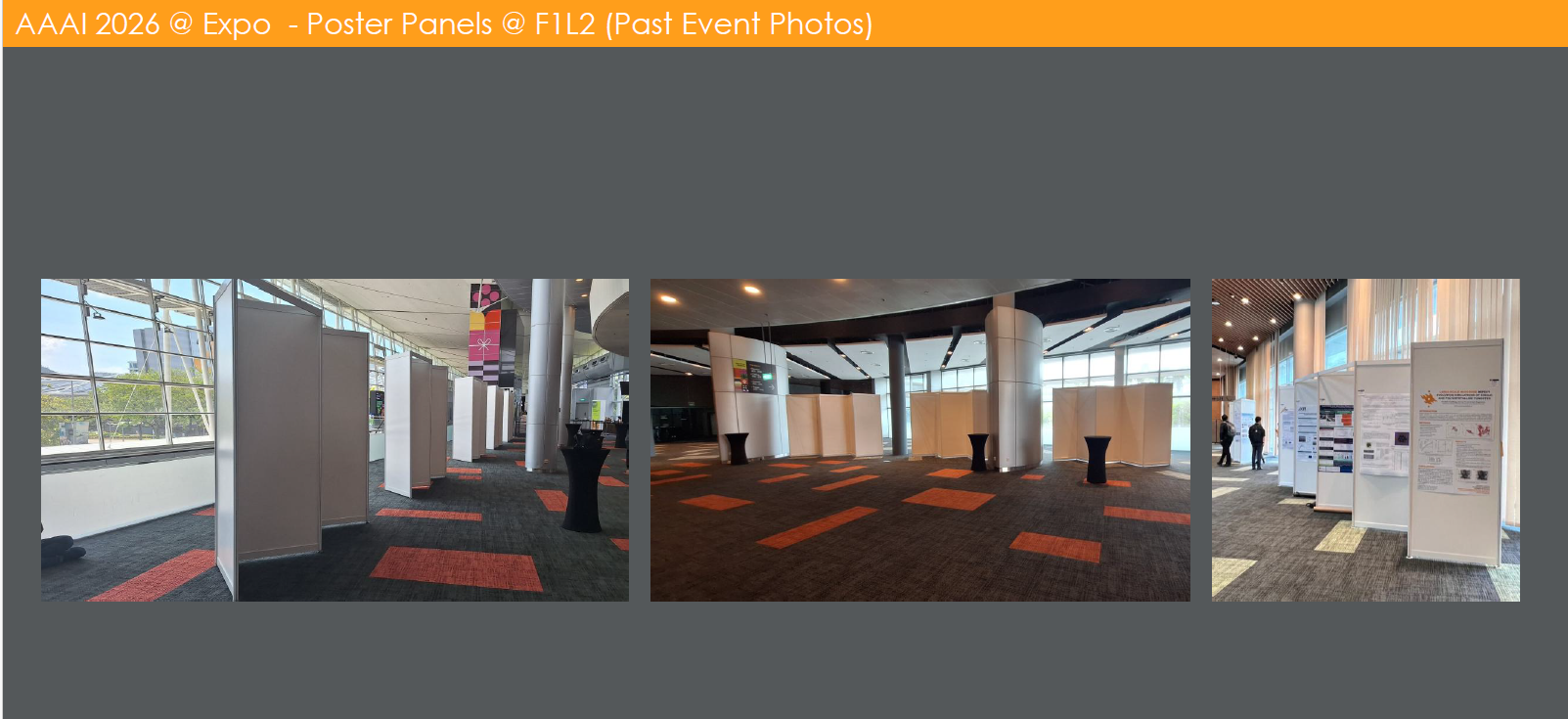
Poster Setup Example
Organizers
This workshop is organized by